TwInn4MicroUp at BIOTECH2026: Oral Presentation, Two Posters and a Scientific Committee Role for the UNIBA Team
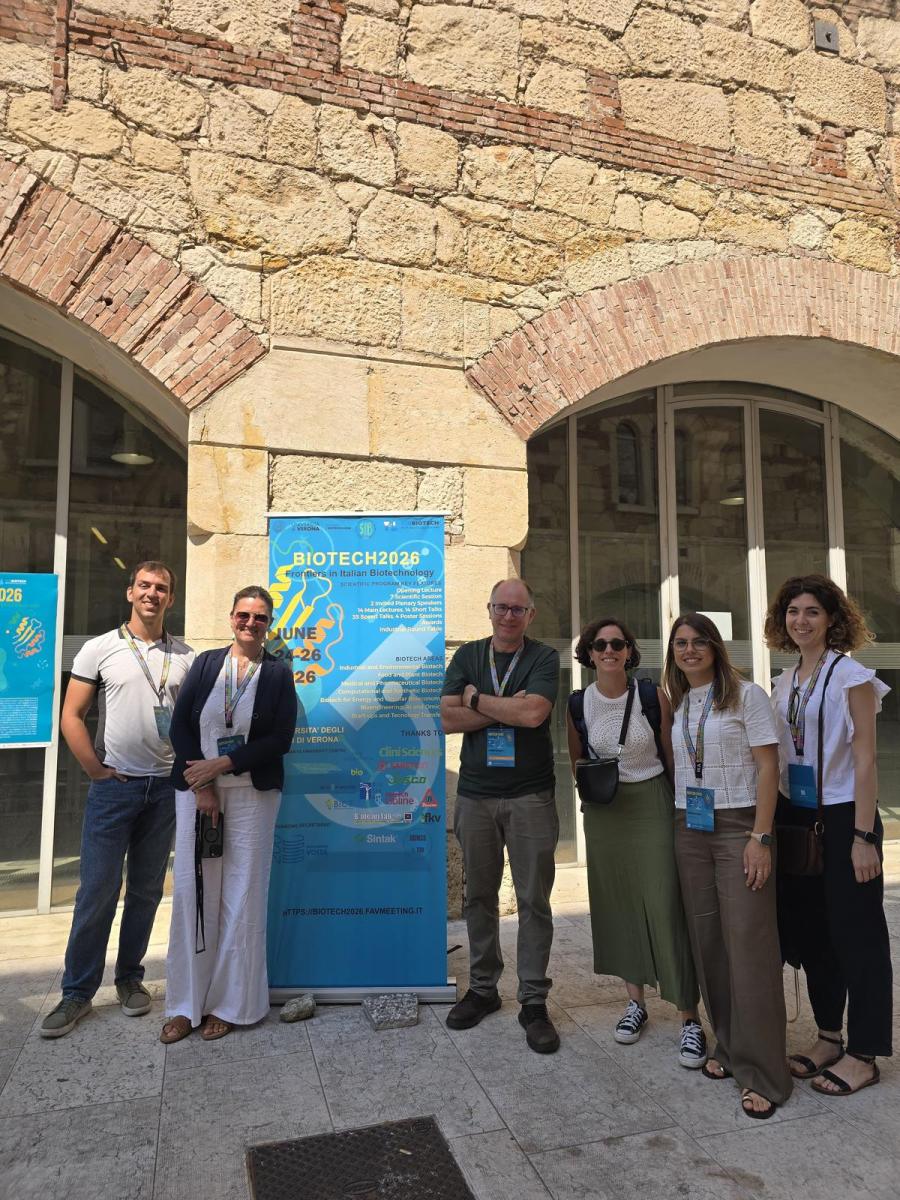
From 24 to 26 June 2026, the University of Verona hosted BIOTECH2026 – Frontiers in Italian Biotechnology, the national congress of Italian biotechnology organised by the Italian Society of Biochemistry and Molecular Biology (SIB) and the Interuniversity Consortium for Biotechnology (CIB). The event brought together the Italian scientific community working across industrial, medical, environmental, food, computational and plant biotechnology, with a special focus on the green and digital transitions. TwInn4MicroUp was represented at the congress by three members of the UNIBA team – Gennaro Agrimi, Eugenia Messina and Serena Barile – who together contributed one oral presentation and two poster presentations, all centred on Yarrowia lipolytica as a microbial platform for waste valorisation and plastic bio-upcycling.
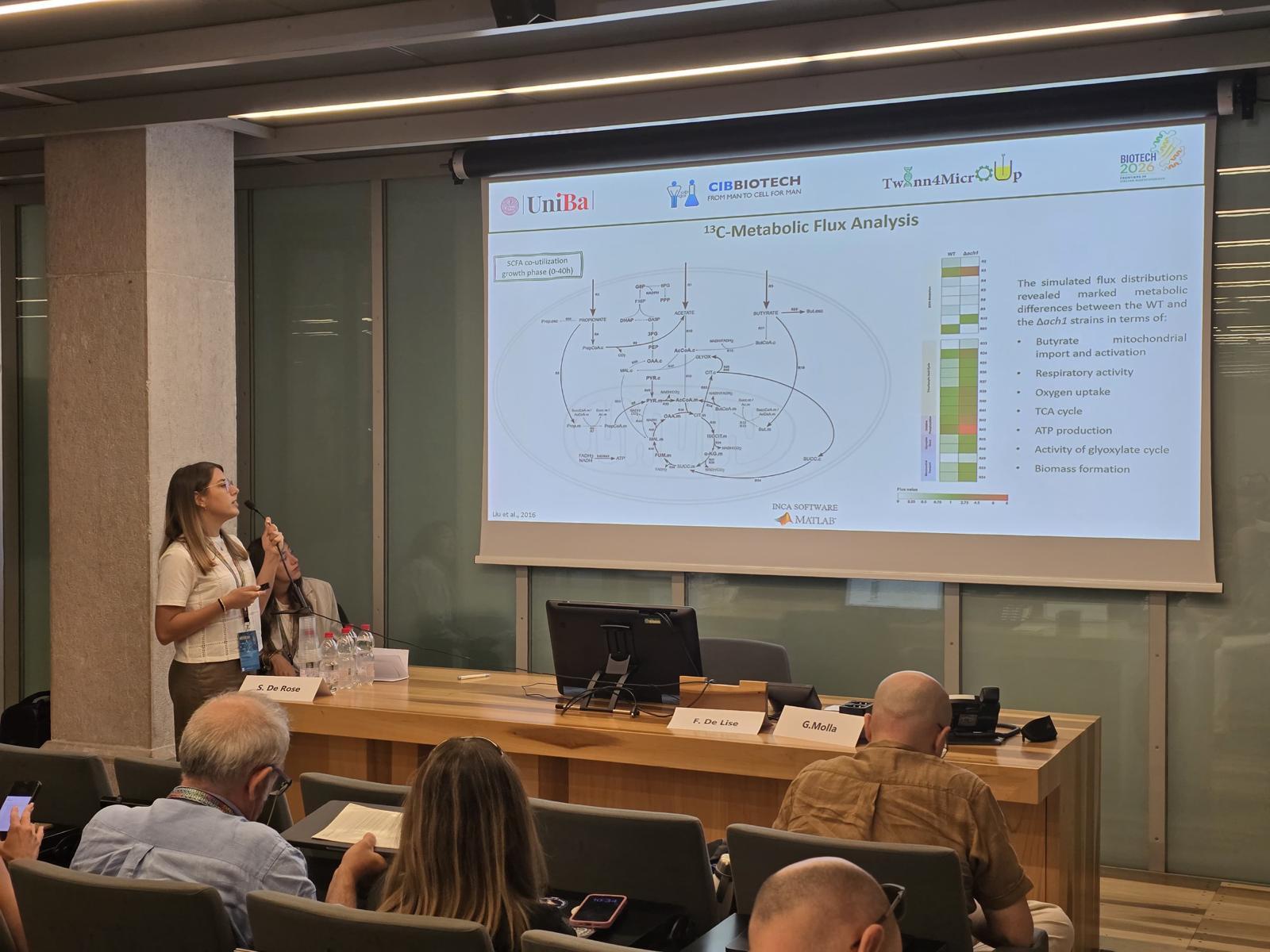
Gennaro Agrimi delivered the oral presentation “Synthetic biology and metabolic engineering of Yarrowia lipolytica for the valorization of waste substrates”. The talk presented work integrating genome engineering strategies – including chromosomal overexpression, gene deletion and gene swapping – with 13C-based metabolic flux analysis (13C MFA) to investigate how Y. lipolytica processes short-chain fatty acids from anaerobic digestion and plastic-derived compounds such as ethylene glycol and lactic acid from PLA depolymerization. By reconstructing intracellular carbon flux maps, the study identifies key metabolic nodes and bottlenecks for further engineering, advancing the development of more efficient biotechnological processes for waste-to-value conversion.
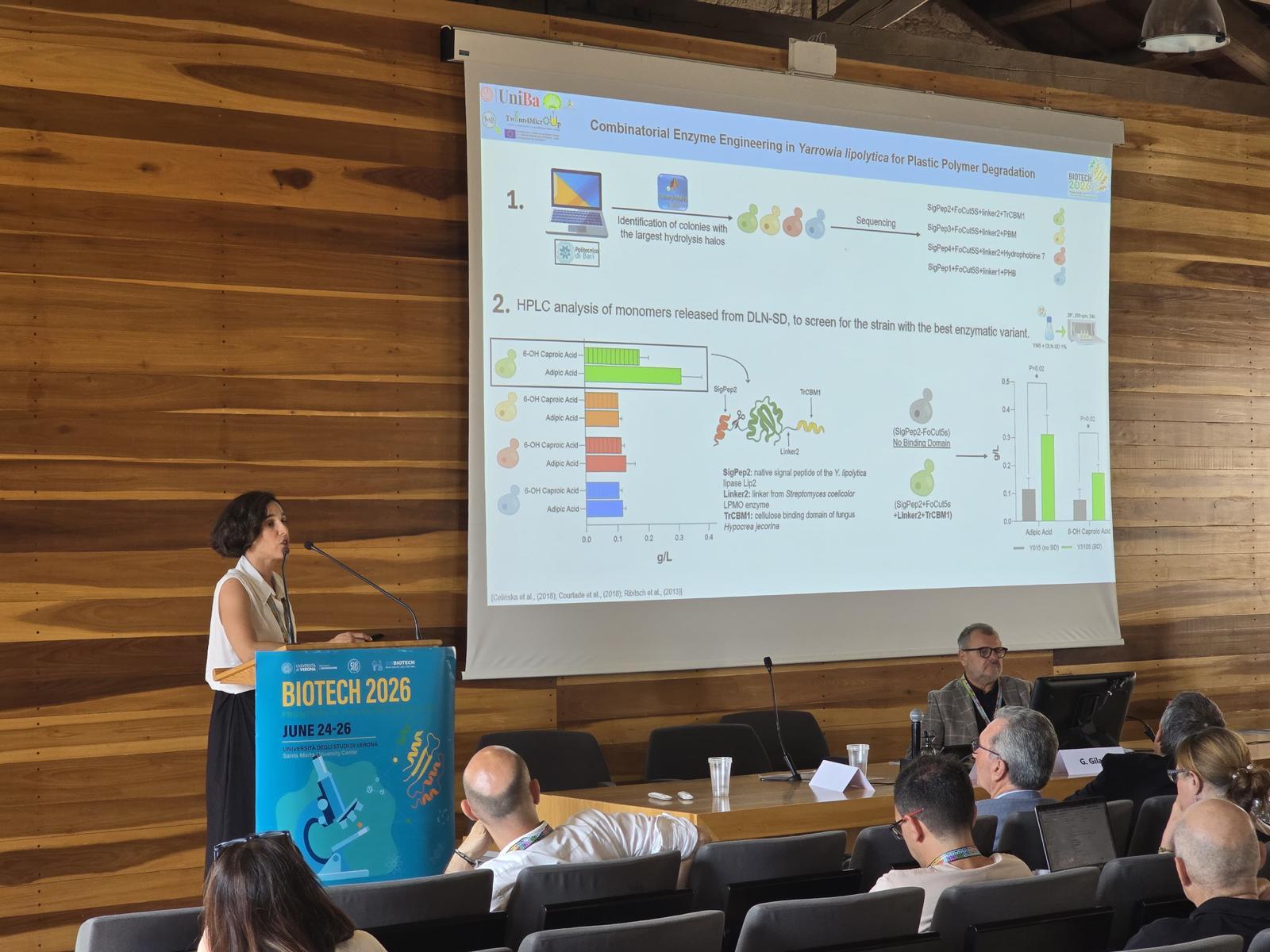
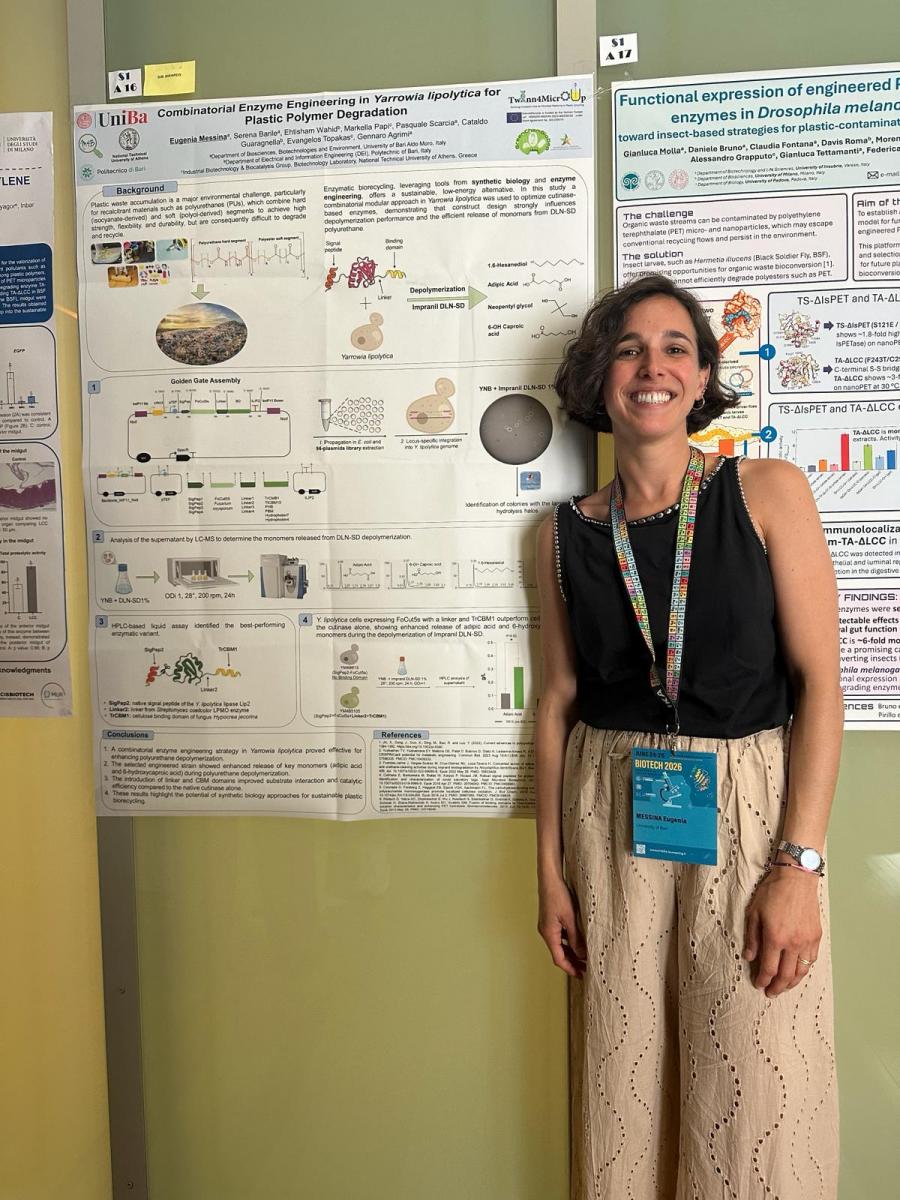
Eugenia Messina presented the poster “Combinatorial enzyme engineering in Yarrowia lipolytica for plastic polymer degradation”, describing the design, CRISPR/Cas9-mediated genomic integration and high-throughput screening of a 96-construct combinatorial library of cutinase variants targeting polyurethane polyesters and poly(ε-caprolactone) degradation. The results show that modular enzyme architecture strongly influences depolymerization efficiency in a substrate-dependent manner, with LC–MS analysis confirming the enzymatic release of polymer-derived monomers. The work is co-authored with collaborators from the Polytechnic of Bari and NTUA.
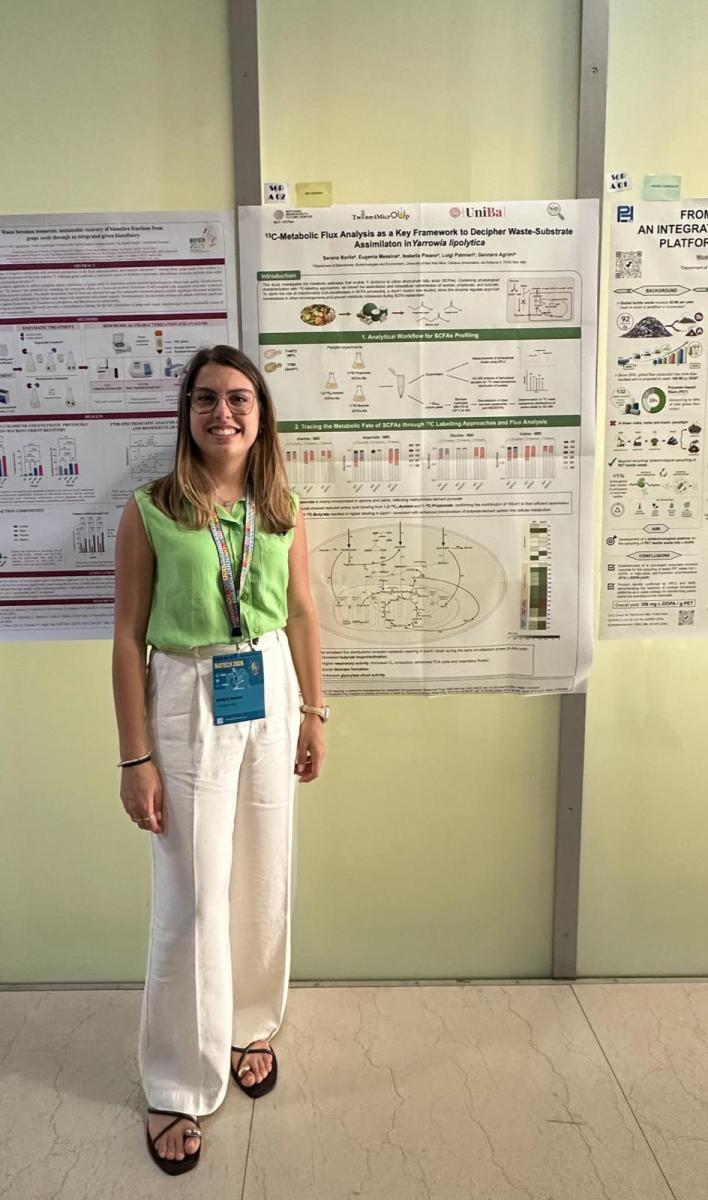
Serena Barile presented the poster “13C-Metabolic flux analysis as a key framework to decipher waste-substrate assimilation in Yarrowia lipolytica”, reporting the first 13C-MFA model built around the core metabolic network of Y. lipolytica to trace carbon flow during growth on short-chain fatty acids and plastic-derived monomers such as ethylene glycol. The study provides the first direct evidence of plastic-derived monomer assimilation into yeast biomass and reveals how carbon pools from different co-substrates interact metabolically, offering actionable targets for further pathway engineering. In addition to these scientific contributions, Gennaro Agrimi served on the Scientific Committee of BIOTECH2026, further reinforcing TwInn4MicroUp’s engagement with the national biotechnology community and the project’s alignment with Italy’s strategic priorities in sustainable industrial biotechnology.
Congress website: https://biotech2026.favmeeting.it