Academy–Industry Forum on Circular Plastics Held at NTUA
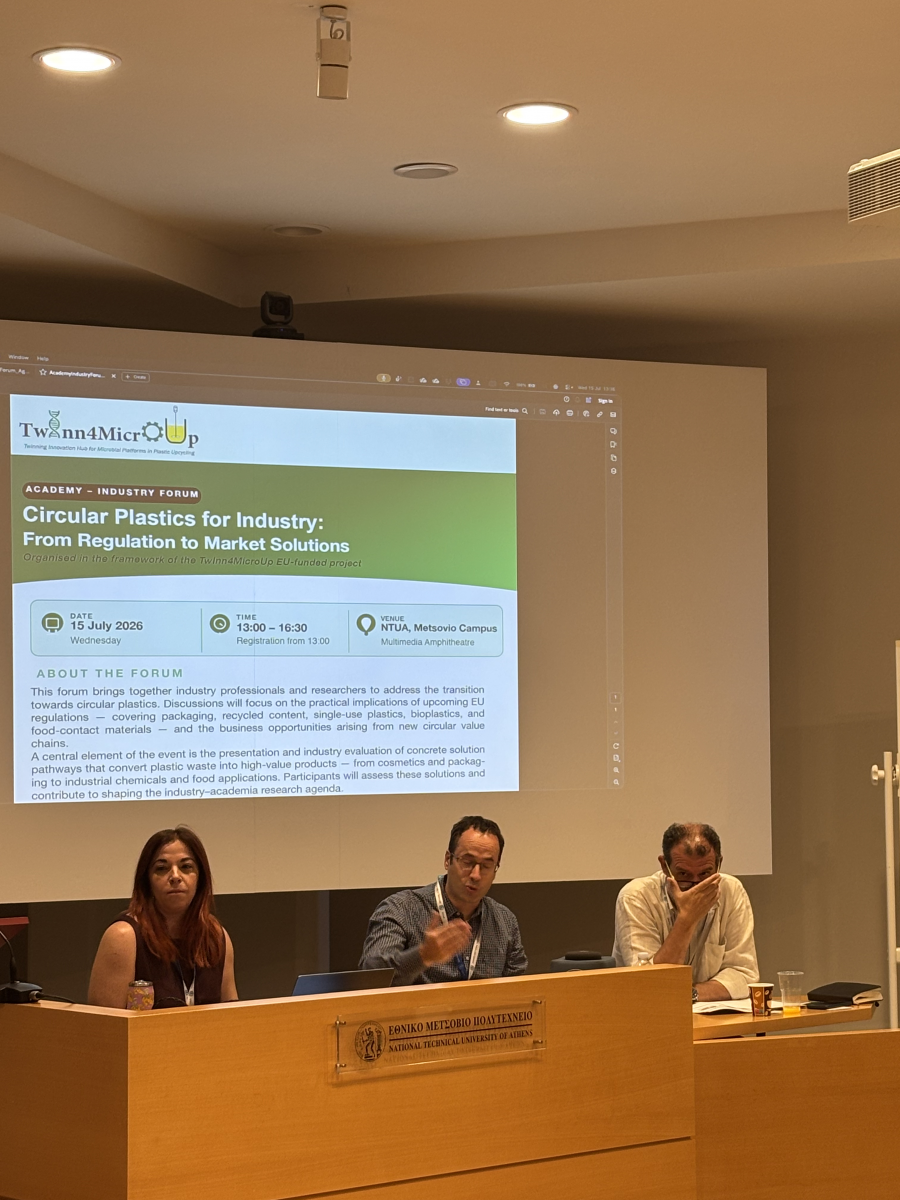
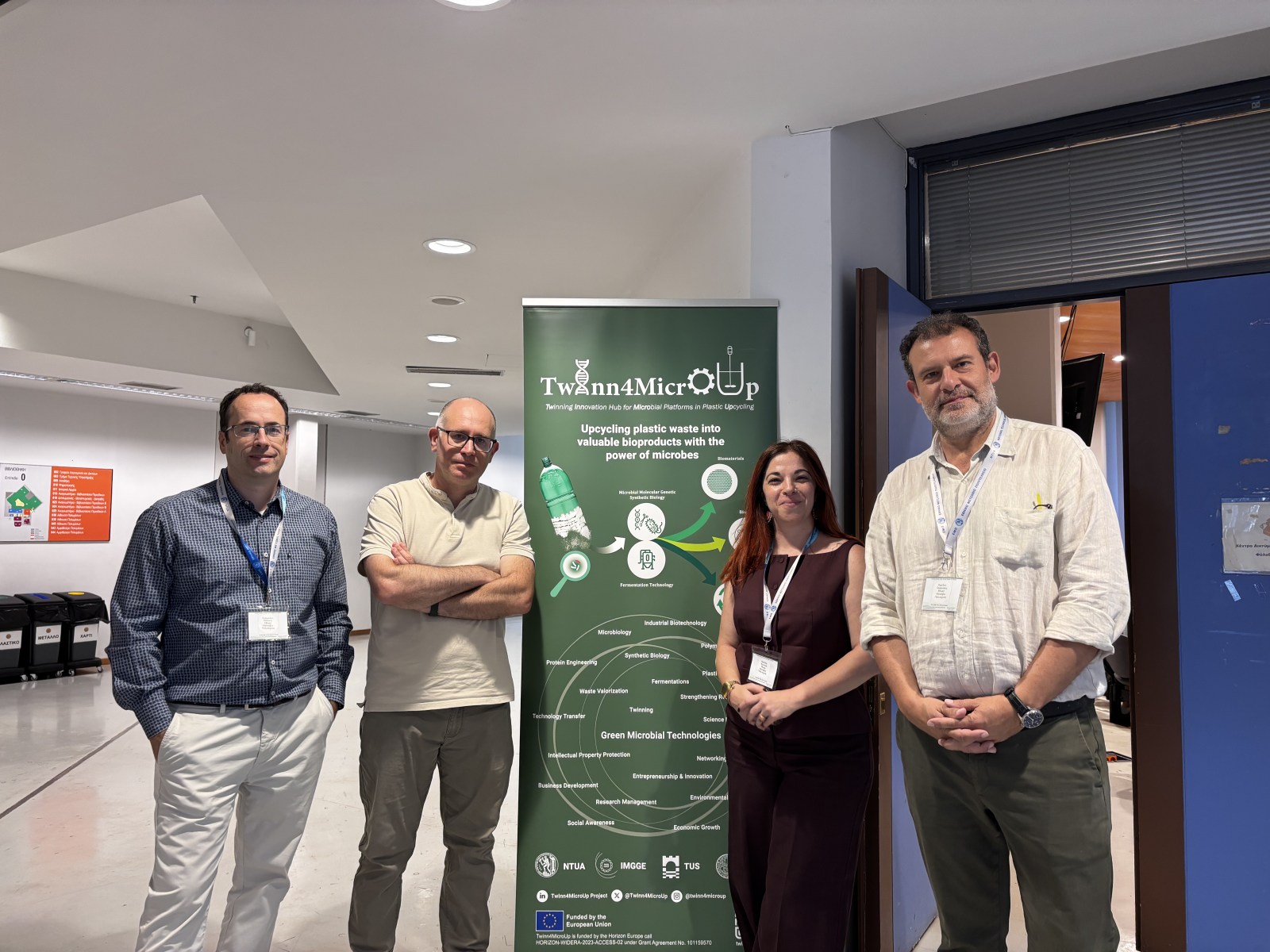
The Academy–Industry Forum “Circular Plastics for Industry: From Regulation to Market Solutions” was held on 15 July 2026 at the NTUA Metsovio Campus, in hybrid format. The event was organised by the IndBioCat and LIEE groups of NTUA, in the framework of the TwInn4MicroUp EU-funded project, and under the auspices of the Association of Hellenic Plastics Industries.
The forum brought together representatives from industry and academia to discuss the transition towards circular plastics, the practical implications of upcoming regulatory requirements, plastic waste upcycling, and opportunities for future collaboration. A central aim of the event was to connect research-driven technologies with real industrial needs and to explore how new circular value chains can support more sustainable and market-relevant solutions.
The event opened with welcome remarks by Prof. Evangelos Topakas, TwInn4MicroUp Project Coordinator, and Prof. Aggelos Tsakanikas, TwInn4MicroUp WP5 Leader. The opening session framed the forum as an opportunity to strengthen dialogue between academia and industry and to examine how research outputs can better respond to the priorities of the plastics sector.
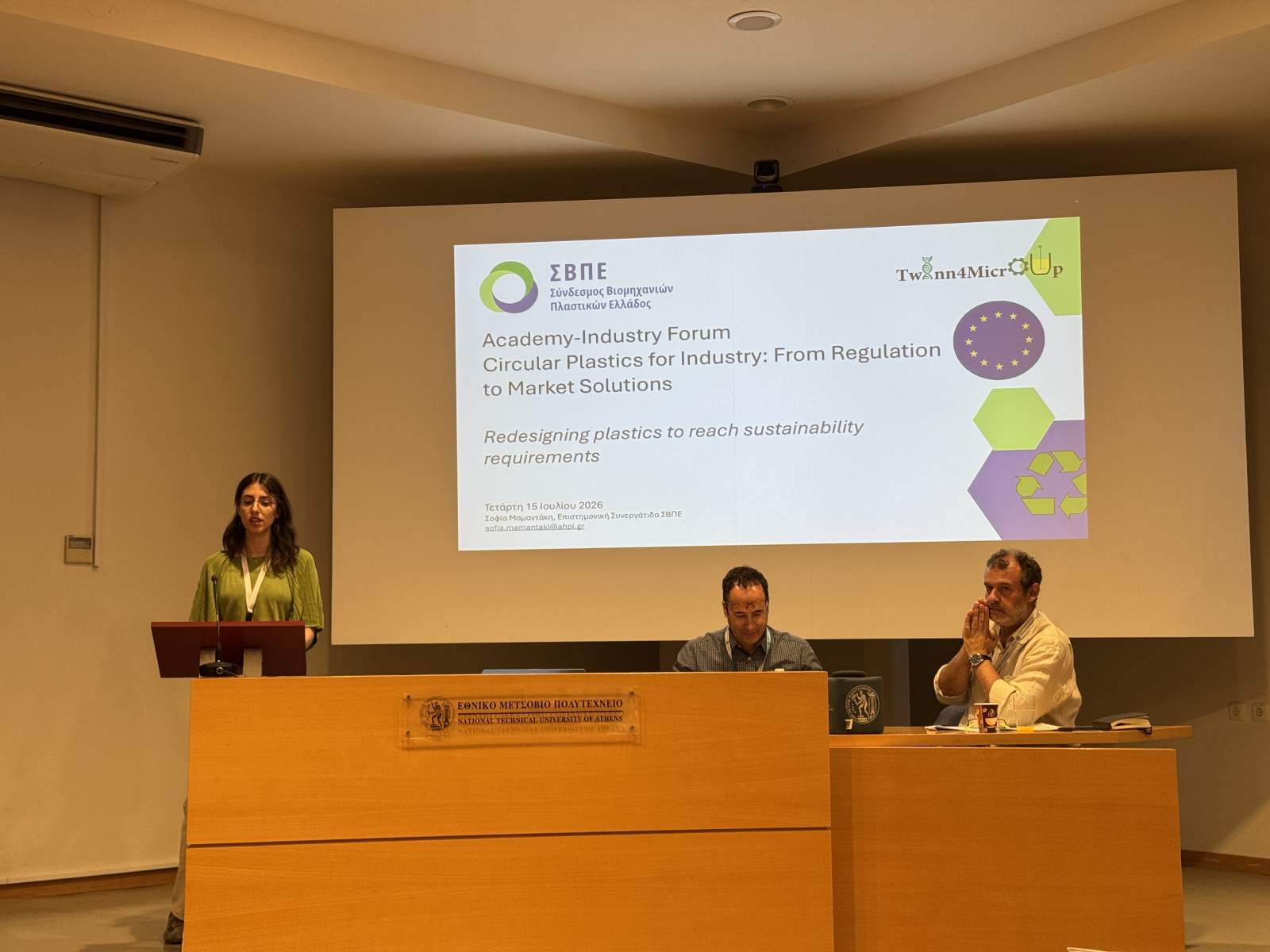
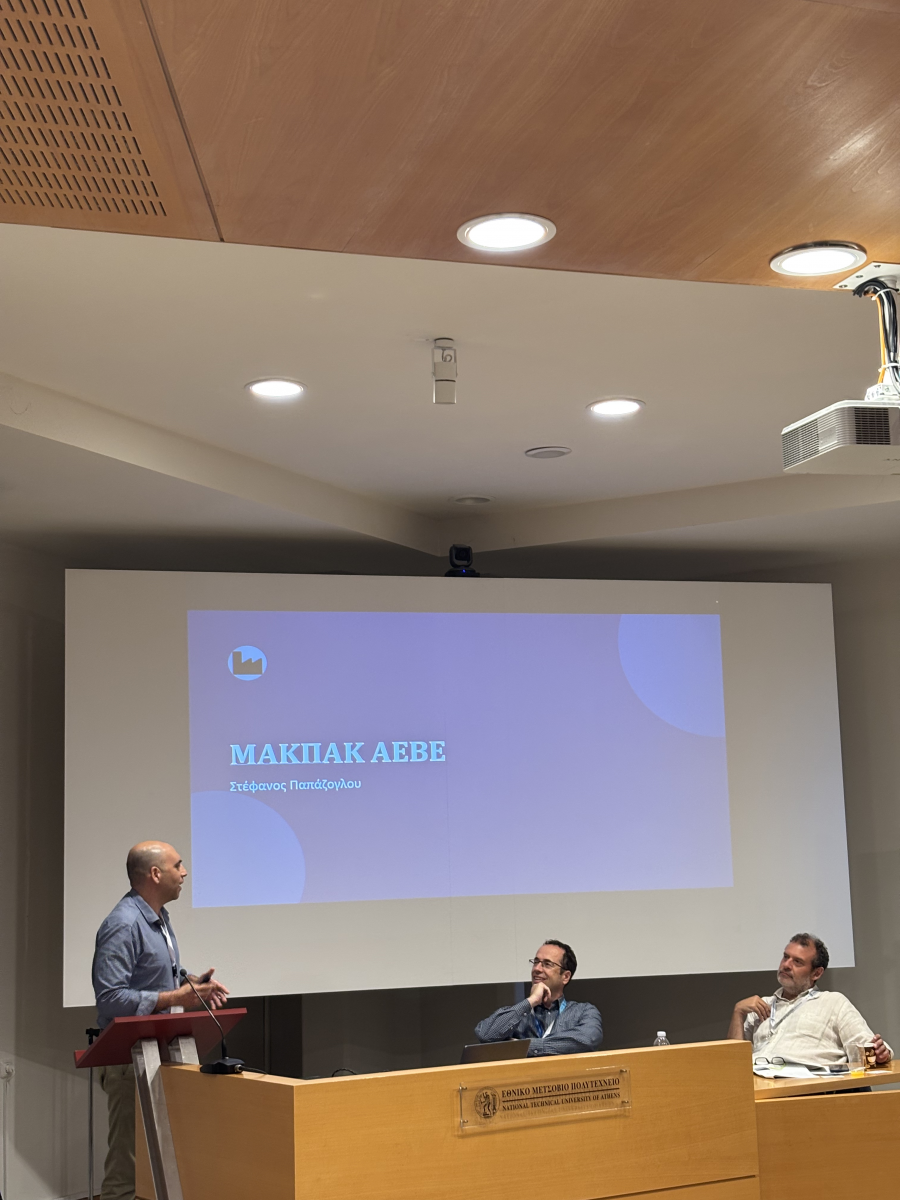
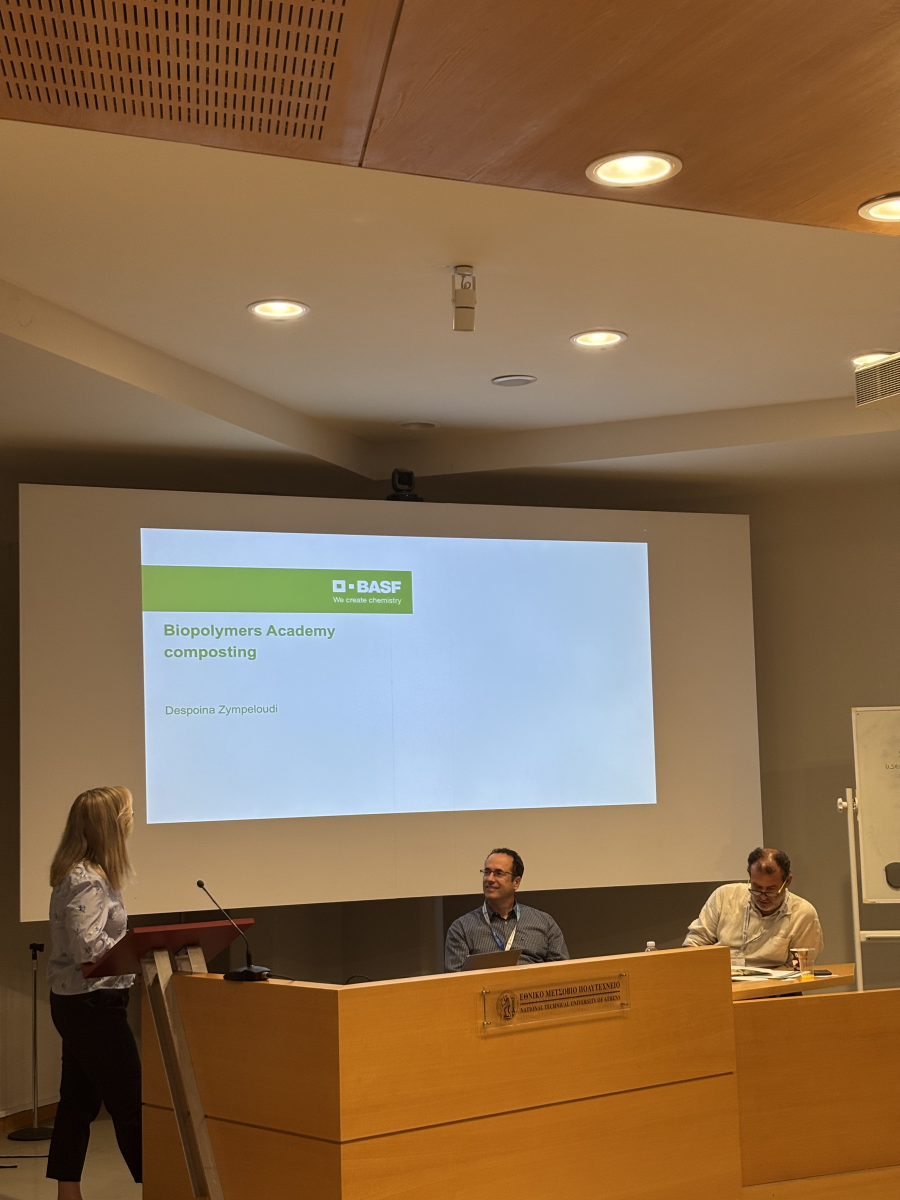
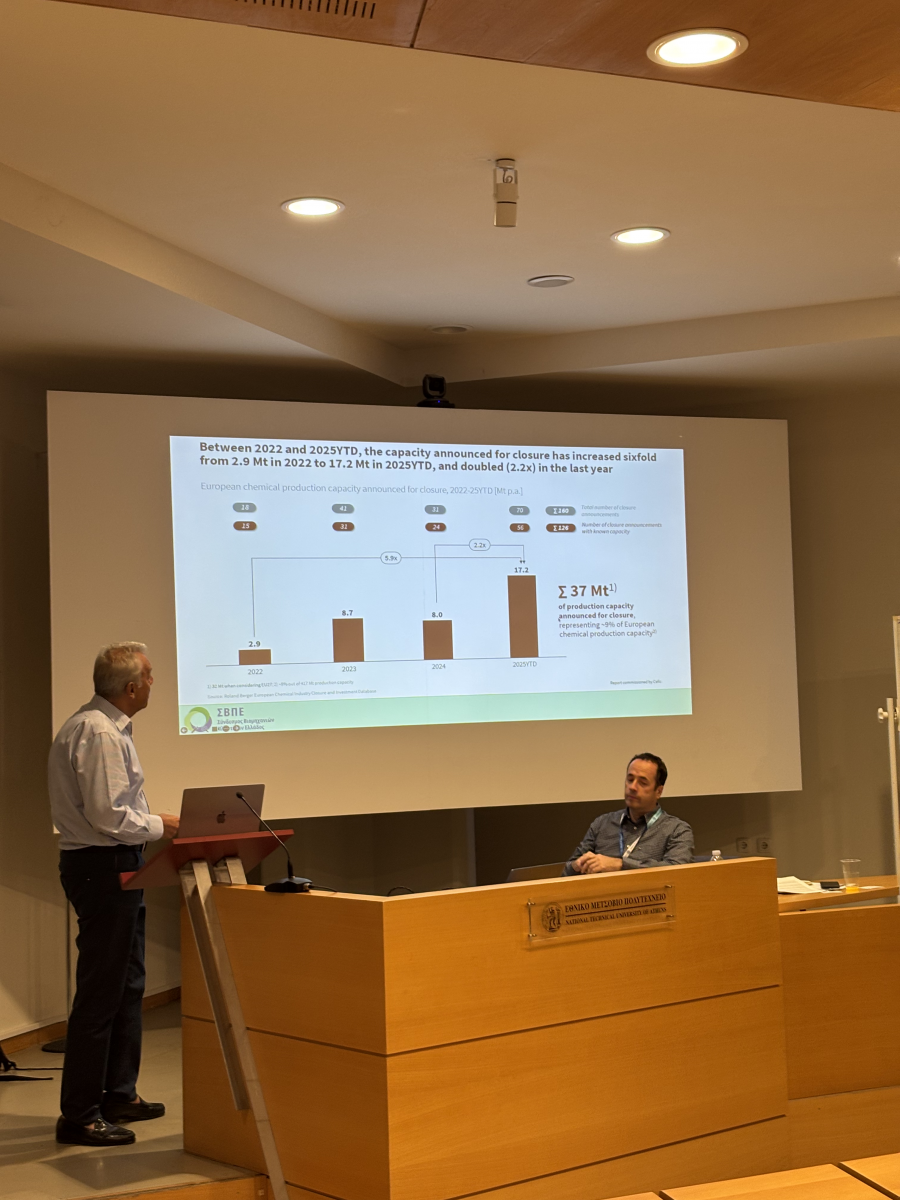
The first session, “Circular Plastics Regulations: What Greek Industry Needs to Prepare for,” focused on regulatory and market developments affecting the plastics industry. Sofia Mamantaki, Scientific Associate at the Association of Hellenic Plastics Industries, presented the topic “Redesigning plastics to reach sustainability requirements.” Stefanos Papazoglou, CEO of PREPAC S.A., discussed “Single-Use Plastics: Recent developments and common misconceptions.” Despoina Zympeloudi, Sales Account Manager at BASF, presented “Bioplastics: Definitions, Opportunities and Challenges,” while George Lysseos, Executive Director of the Association of Hellenic Plastics Industries, addressed “Beyond Compliance: Innovation and Competitiveness in Circular Plastics.”
Following the coffee break, the second session, “From Waste to High-Value Products: Industry Evaluation of Solution Pathways,” introduced the innovation-oriented part of the forum. Prof. Topakas presented plastic waste not only as a waste-management challenge, but also as a potential feedstock for new high-value product pipelines through plastic upcycling. Dr. Christina Ferousi then presented the evaluation process, through which participants were invited to assess the proposed solution pathways. The portfolio presentation, “Portfolio of Solutions: Where Are the Business Opportunities?”, was delivered by Prof. Tsakanikas and Prof. Topakas. It focused on selected opportunities emerging from the TwInn4MicroUp research portfolio, including applications in cosmetics and personal care, circular biopolymer solutions, green industrial chemicals, and sustainable colorants and nutritional ingredients.
A key objective of the session was to collect industry feedback on the relevance, feasibility, market potential, and possible adoption of these solution pathways. In total, 15 industry participants had registered for the forum, with six attending in person and approximately six more joining online. Around ten participants from academia also followed the discussion either onsite or remotely. During the forum, ten evaluation forms were completed on the spot or online, while additional participants indicated that they would complete the questionnaire later or forward the evaluation link to colleagues within their organisations.
The forum concluded with a roundtable discussion on “Industry Priorities and Collaboration Opportunities,” moderated by Prof. Tsakanikas. The discussion focused on how industry priorities can inform academic research directions, the barriers that may affect the adoption of circular plastics technologies, and the types of collaboration that could support more effective interaction between companies and research organisations.
Overall, the forum created a focused space for exchange between the research community and industrial stakeholders. It helped position the TwInn4MicroUp innovation portfolio within a real market and regulatory context and provided initial industry input that will support the further prioritisation of solution pathways. The event also contributed to the broader objective of TwInn4MicroUp: promoting research that moves closer to real-life application and creating opportunities for meaningful industry–academia collaboration.