New publication “Tenebrio molitor-derived enzyme systems enable solvent-reduced recovery of intracellular polyhydroxyalkanoates”
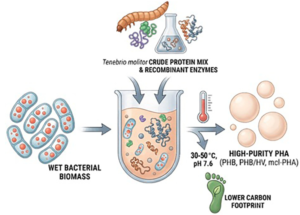
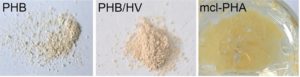
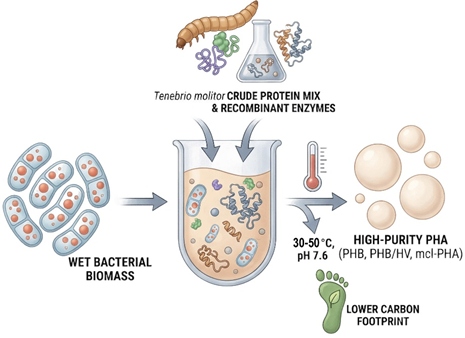
We are pleased to share a new publication entitled “Tenebrio molitor-derived enzyme systems enable solvent-reduced recovery of intracellular polyhydroxyalkanoates”, recently published in Microbial Biotechnology. The study presents a novel approach for the recovery of intracellular polyhydroxyalkanoates (PHAs), combining biological processing with reduced solvent usage to improve the sustainability of downstream biopolymer extraction. PHAs are biodegradable microbial polyesters considered promising alternatives to conventional petroleum-based plastics. However, large-scale commercialization of PHAs remains challenged by costly and solvent-intensive recovery procedures. Traditional extraction methods often rely on chlorinated solvents and energy-demanding purification steps, limiting the environmental and economic sustainability of PHA production.
In this work, the authors investigate enzyme systems derived from the mealworm Tenebrio molitor as an alternative biological tool for selective digestion of microbial biomass while preserving PHA integrity. Building upon previous findings demonstrating the ability of mealworms to biologically assist PHA recovery, the study advances the concept toward solvent-reduced and potentially scalable downstream processing strategies. The proposed approach contributes to the development of greener biotechnological processes aligned with circular economy principles. By integrating biological recovery systems into PHA purification workflows, the study opens new perspectives for reducing environmental impact and improving the sustainability profile of bioplastic production.