TwInn4MicroUp at IFPB 2026 – 13th International Conference on Fiber and Polymer Biotechnology
In August 2026, Vukašin Janković, a researcher from the Institute of Molecular Genetics and Genetic Engineering (IMGGE) and member of the Eco-Biotechnology and Drug Development (EDB) group, participated in IFPB 2026, the 13th International Conference on Fiber and Polymer Biotechnology, held from 26 to 28 August at the historic headquarters of the University of Genoa, Italy. The conference was organised by the Chemo-Enzymatic Processes Laboratory, Department of Chemistry and Industrial Chemistry (Prof. Alessandro Pellis and Prof. Orietta Monticelli) and brought together researchers, students, research institutes and industry representatives active in textile, fiber and polymer biotechnology. The scientific programme covered enzymatic synthesis and depolymerization of fibers and polymers, biotechnology for sustainable textiles, microbial biomaterials, and future trends in polymer bioprocessing.
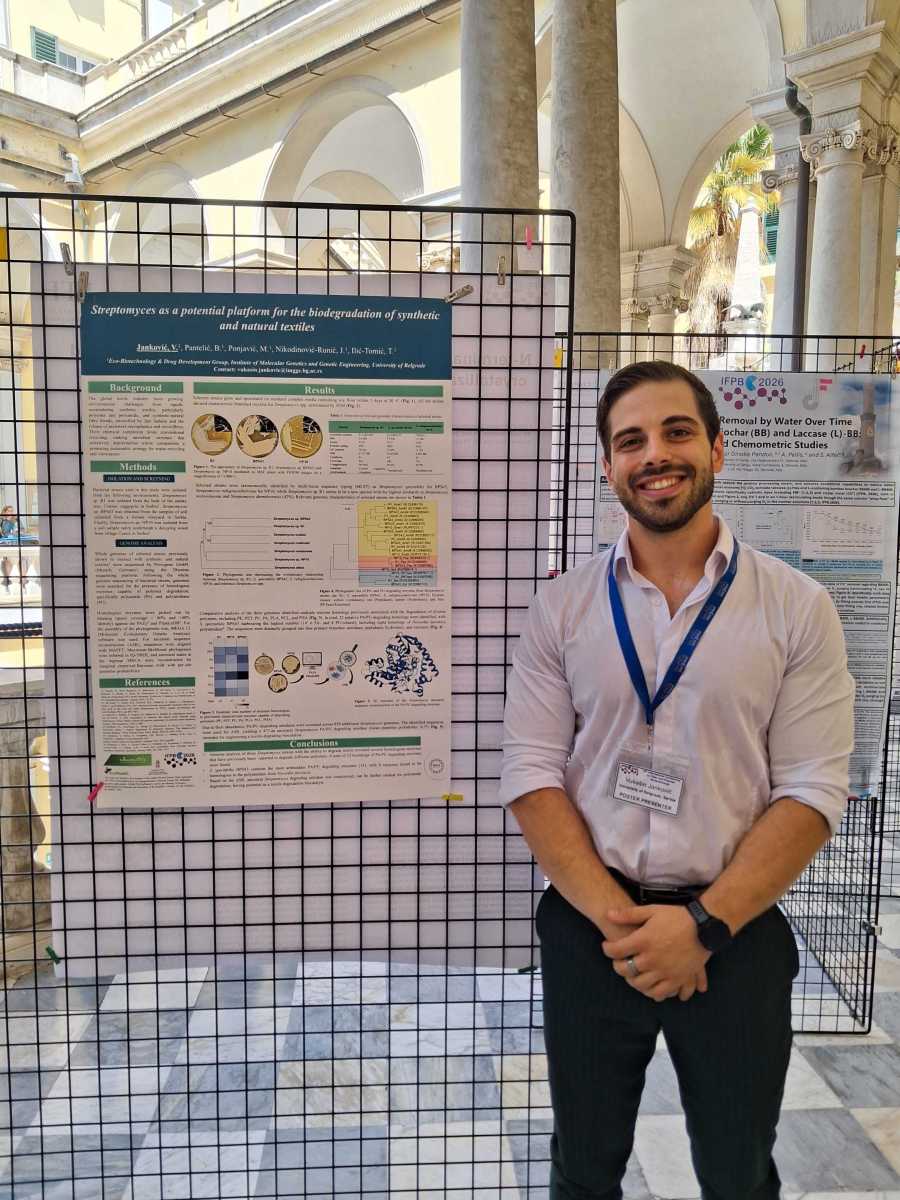
The IMGGE contribution was a poster presentation entitled “Streptomyces as a potential platform for the biodegradation of synthetic and natural textiles”, co-authored by B. Pantelić, M. Ponjavić, J. Nikodinović-Runić and T. Ilić-Tomić. The poster explored the potential of Streptomyces as a microbial platform for the biodegradation and valorisation of synthetic and natural textiles — a major source of persistent microplastics and microfibres. Three Streptomyces strains isolated from different environments in Serbia (Streptomyces sp. R1, S. spectabilis BPS43 and S. rubiginosohelvolus NP10) were characterised by multi-locus sequence typing and whole-genome sequencing, and their genomes were mined for homologues of polyamide (PA) and polyurethane (PU) degrading enzymes.
In total, 22 putative PA/PU-degrading homologues were identified, with S. spectabilis BPS43 harbouring the highest number (14). Screening of 850 additional Streptomyces genomes and ancestral sequence reconstruction further yielded a 477-amino-acid ancestral PA/PU-degrading amidase, proposed as a starting point for engineering a textile-degrading biocatalyst. These findings position Streptomyces as a promising chassis for the development of enzymatic tools for sustainable textile processing and plastic upcycling.
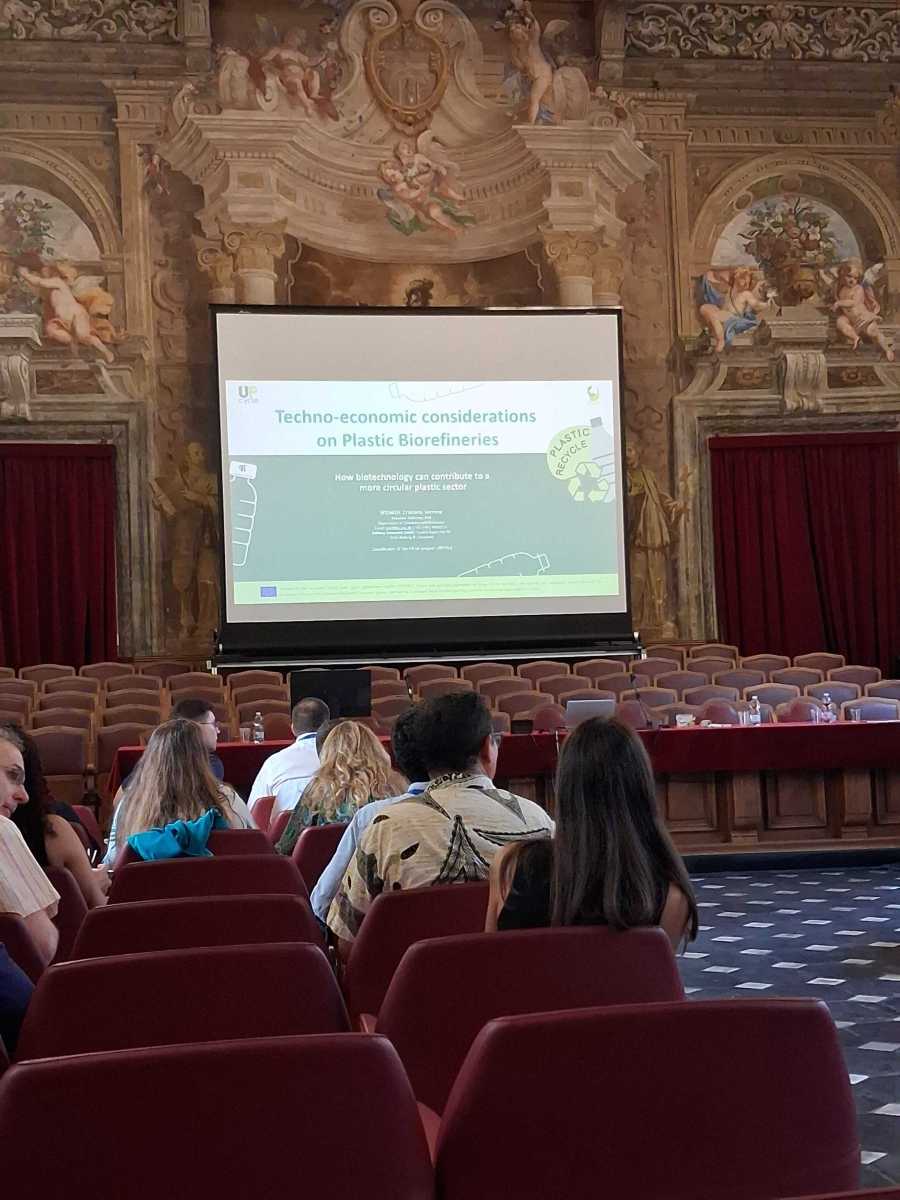
Through the poster presentation and discussions, TwInn4MicroUp was showcased as a key initiative enhancing the international visibility and scientific excellence of IMGGE in the field of fiber and polymer biotechnology. Vukašin also attended key lectures relevant to his research direction, including the talk “Techno-economic considerations on Plastic Biorefineries”, given by Prof. Cristiano Varrone (Aalborg University), coordinator of the Horizon Europe project UPCYCLE. The participation facilitated networking with leading research groups in enzymatic and microbial polymer and textile biotechnology, opening new perspectives for future collaborations that will directly benefit the further characterisation and engineering of the reconstructed ancestral amidase.
The participation at IFPB 2026 represents an important milestone for TwInn4MicroUp’s dissemination activities, strengthening the project’s presence in the international community working at the interface of microbiology, enzyme technology and sustainable materials. The visibility of TwInn4MicroUp, together with the related EcoPlastiC project, was strengthened through active participation and dissemination of project outcomes.