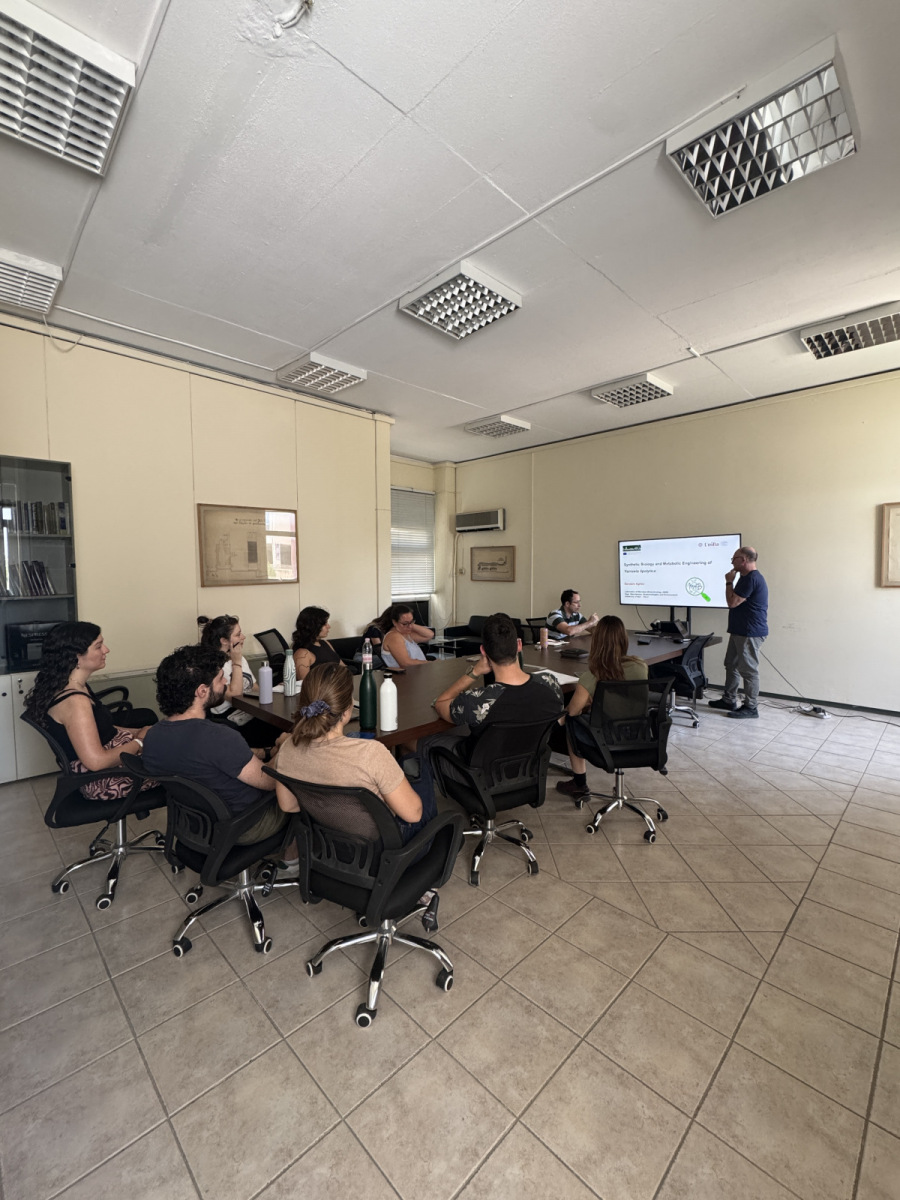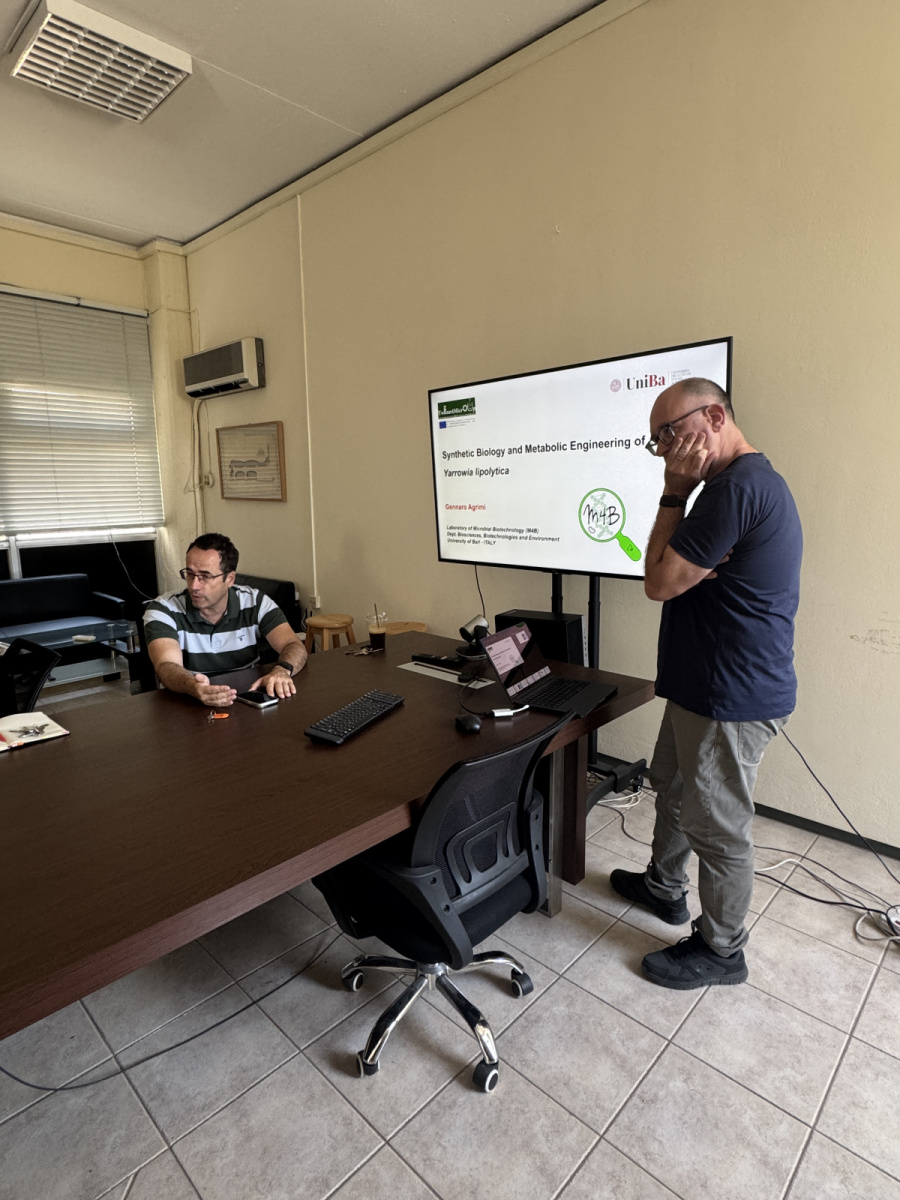
NTUA hosts workshop on Synthetic Biology and Metabolic Engineering of Yarrowia lipolytica
On 16 July 2026, NTUA hosted Prof. Gennaro Agrimi from UNIBA for a specialized workshop on the genetic engineering of the non-conventional yeast Yarrowia lipolytica. The visit formed part of the planned TwInn4MicroUp secondment activity “Infrastructure for synthetic microbial biotechnology for bacteria and yeast set-up”, foreseen under the project’s Grant Agreement.
Prof. Agrimi’s visit represented the knowledge-transfer and training component of this secondment activity, providing NTUA researchers with an overview of the complete strain-engineering workflow, from DNA assembly and microbial transformation to genomic integration, molecular confirmation, and phenotypic assessment. The secondment activity will be further complemented by a subsequent visit of an experimental researcher from UNIBA, focusing on hands-on experimental work and implementation of the relevant methodologies.
The training began with an introduction to Golden Gate assembly and the YaliCraft toolkit, demonstrating how standardized genetic parts—including promoters, coding sequences, terminators, selection markers, and replication origins—can be efficiently combined into expression constructs. The workshop then explored transformation of Y. lipolytica and the integration of expression cassettes into its genome. Key concepts included non-homologous end joining, homologous recombination, CRISPR/Cas9-assisted targeting, guide RNA design, homology arms, and marker-based and marker-free selection. Molecular validation was also presented as a central part of the workflow, covering genomic DNA extraction, colony PCR, primer design, agarose gel electrophoresis, and strategies for confirming gene integration and gene disruption. Finally, spot assays and substrate-containing plates were introduced as tools for linking genetic modifications with observable phenotypes. By connecting construct design with strain validation and functional testing, the workshop provided participants with a comprehensive understanding of Y. lipolytica engineering.
The activity strengthened NTUA’s expertise and infrastructure in synthetic microbial biotechnology while supporting knowledge exchange between NTUA and UNIBA within TwInn4MicroUp.